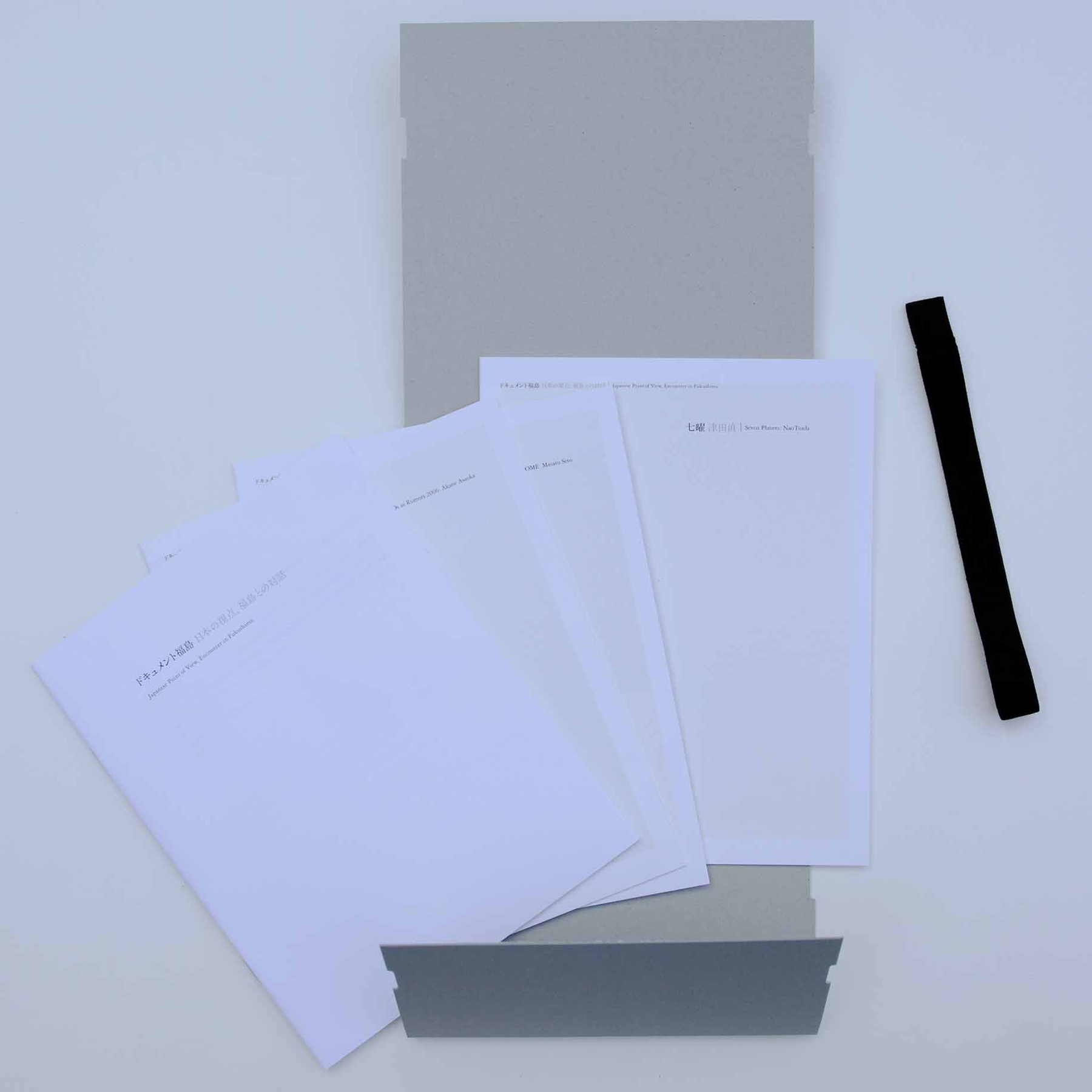
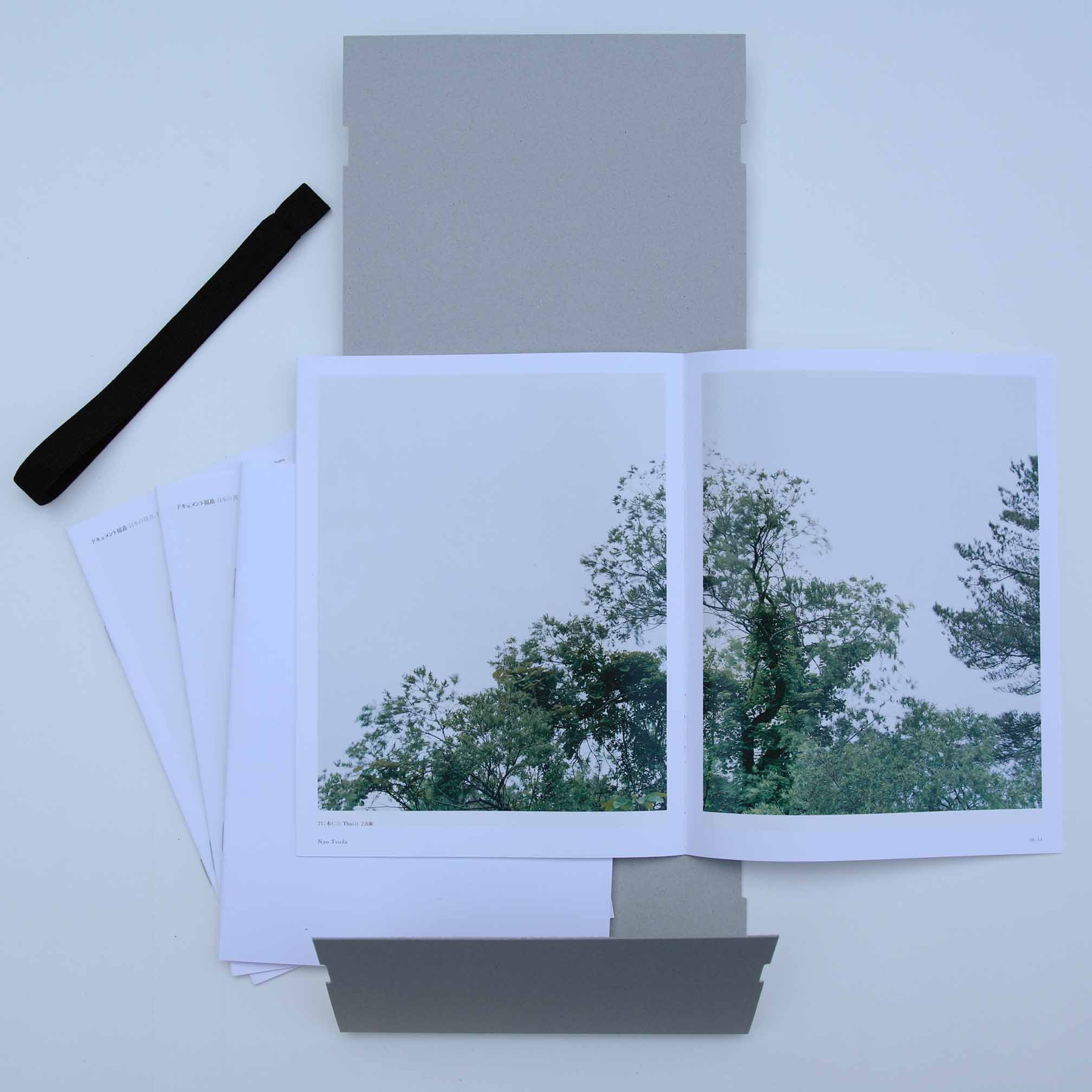
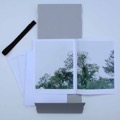
「ドキュメント福島|日本の視点、福島との対話」 展覧会カタログ
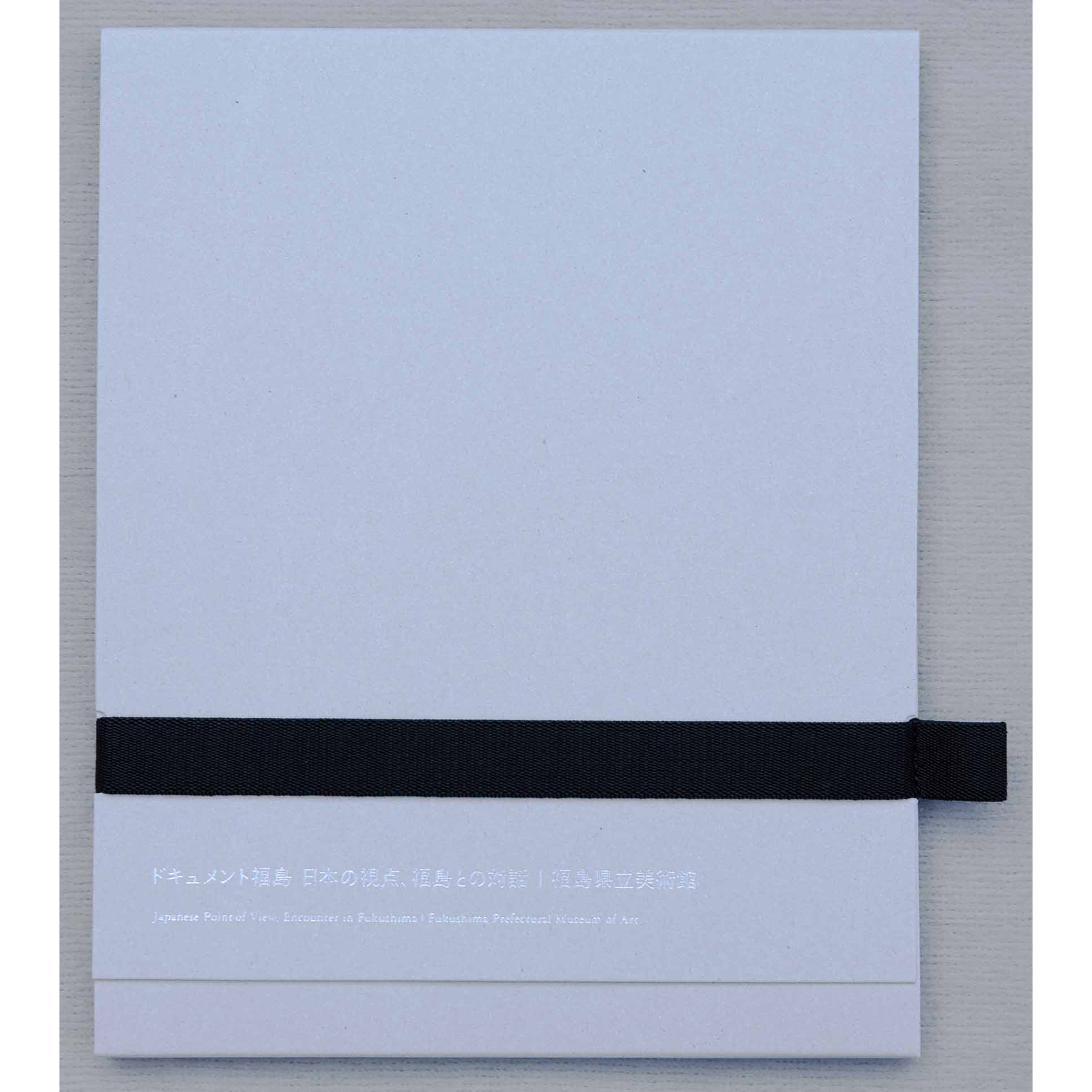
ドキュメント福島|日本の視点、福島との対話 展覧会カタログ
Japanese Point of View, Encounter in Fukushima
–
「日 月 五星」
日から月へやがて五星を廻って土は日を見る。
それは眠りから覚めるころの話で土は日が昇るとともに地面の奥へと姿をひそめる。
平安時代からこの暦が一度たりと狂うことなく受け継がれている。
日は月を背に、月は火から遠のき、火は水に浸り、水は木を育て、木は金星を指してきた。東の空に金星が輝く頃、土は少しずつ気温を上げて、一気に風に乗り、砂は地球を何周もしてゆく。日は光りでもって陰を消し去り、自らを燃やしながら世界を照らしている。日は今までに送り出してきたエネルギーと同じ量の光りはまだ持ち続けているという。
ひとときの七曜として生きている。
世界を照らし続けている。
(「七曜」本文より)
–
2006年7月29日発行
発行:福島県立美術館
参加作家:朝岡あかね、瀬戸正人、津田直
テキスト:酒井哲朗、荒木康子
デザイン:秋山伸+松井健太郎[schtücco]
編集:荒木康子/福島県立美術館
“Sun, Moon, Five Planets”
From the sun to the moon, the earth eventually turns around the five planets and sees the sun.
This is the time when it awakens from its slumber, and as the sun rises, the earth disappears deep into the ground.
This calendar has been passed down without a single deviation since the Heian period.
The sun has its back to the moon, the moon moves away from fire, fire is immersed in water, water nourishes trees, and trees point to Venus. As Venus shines in the eastern sky, the earth gradually warms up, and then, carried by the wind, the sand circles the earth many times. The sun dispels shadow with its light, illuminating the world while burning itself. It is said that the sun still possesses the same amount of light as the energy it has sent out so far.
It lives on as the seven celestial bodies for a brief moment.
It continues to illuminate the world.
(From the text of “Seven Days”)
*In Japanese, Seven days (a week) are shown 日, 月, 火, 水, 木, 金, 土 in Chinese character, and it mean Sun, Moon, Fire, Water, Trees, Venus, and Earth.